
Dryer Vent Cleaning
Clear the lint so the dryer runs cool, fast, and safe.
Learn moreIn a building full of dryers, nobody watches the ducts, and lint packed behind a wall is the same kind of hidden fire hazard we find in chimneys. Residents empty the lint screen, maintenance replaces a belt, and the run through the wall and up to the roof cap can go years without a brush. We work through the building unit by unit: dryer pulled, duct brushed out and HEPA-vacuumed, roof caps and bird guards cleared, airflow read at the exit. Every unit gets its own entry in a record an insurer, fire inspector or condo board can follow. The starting price covers one unit's standard run; shared laundry rooms, laundromats and long roof runs are quoted after a walkthrough.
A lint screen catches plenty, but not everything. What slips past settles in the duct, which in a multi-story building may climb several floors to a roof cap residents never see and maintenance rarely visits. Lint packs into the bends and under that cap while the dryers below take longer and run hotter, load after load. Fire investigators name failure to clean as the leading factor in clothes-dryer fires. In a house, that fire threatens one household. In a stacked building, a fire that starts in one unit's vent can spread to the homes above and beside it.
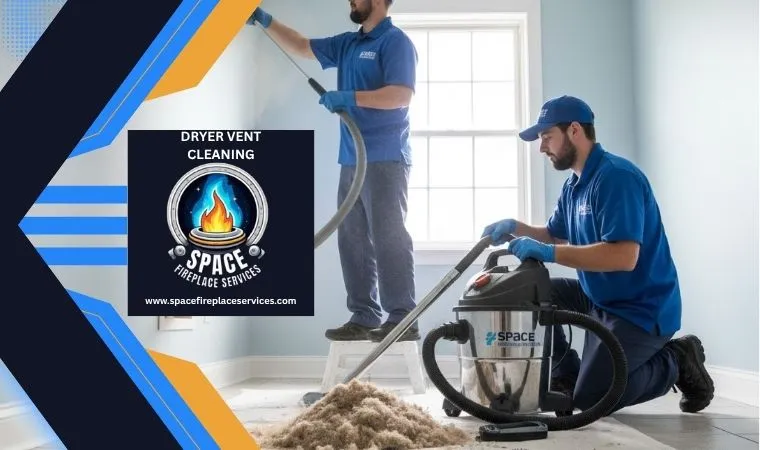
Inside a unit, the job is a house call repeated down the hall. We pull the dryer, disconnect the transition and run a rotary brush through the wall or ceiling duct while a HEPA vacuum catches what breaks loose. On the roof we open each cap and lift out the mat of lint under it. A mesh bird guard gets cleared and written up, because mesh at a dryer exit acts as a second lint screen and the residential code forbids screens at the termination. Shared laundry rooms are a separate job. Commercial dryers follow the International Mechanical Code plus the maker's exhaust specifications for duct size, run length and makeup air, and we compare the installation against both.
Occupied buildings set the pace, so we plan the route with your office: which buildings on which days, which units need an escort, which residents want a morning slot. Your team sends the entry notices, and residents clear the space around the dryer. Hotel laundries and laundromats run on a different clock. Every machine has to be off and cool before we open a duct, so we come before the first loads or in hours you choose. Each unit then gets its own line: unit number, before-and-after photos, the airflow reading and any defect we found. A carrier, fire inspector or board asks for that record after a fire, and it only helps if it already exists.
Cleaning has limits, and it is better to hear them before the invoice. No brush fixes a duct that is too long, crushed inside a chase or made of foil. For household-size dryers we check each run against IRC M1502: 4-inch rigid metal duct, a 35-foot maximum developed length reduced for bends unless the dryer maker allows longer, a UL 2158A-listed transition no longer than 8 feet, a backdraft damper at the exit and no screen over it. A run that misses those marks can move too little air even when clean. The fix is a reroute or repair, sometimes through a finished ceiling, quoted separately. In a condo, the governing documents decide who pays.
A walkthrough with your team maps every laundry room, stacked run, roof hatch and exit.
We set the route building by building and give your office unit lists for resident notices.
We pull each dryer, brush the run end to end and catch the loosened lint in a HEPA vacuum.
We open roof caps and wall hoods, pull out packed lint and nests, and check that each damper swings free.
A reading at every exit after cleaning turns a weak run into a number you can see.
You get the per-unit log, the missed-unit list and written quotes for any repairs.
We've worked on 1,000+ homes over 10+ years. Dryer vents run on the same routine as our fireplace and chimney work: a written quote, photos of the run before and after, and the warranty in writing.
One line per unit, with photos and an airflow reading, instead of a single receipt for the building
Roof caps, wall hoods and mesh bird guards cleared along with the duct itself
No unit marked clean unless we got inside it
Reroutes and repairs quoted in writing, apart from the cleaning price
A lint-choked dryer vent is a fire hazard the same way a dirty flue is, so it gets the same crews and the same standard: licensed and insured, with every run photographed before and after. We're the team you call when you want it done right the first time — no rotating subcontractors, no upsell pressure, no surprises. Same techs, same trucks, same standard.
Both. Units with their own washer-dryer hookups usually have a duct of their own running to a wall or roof exit, though some mid-rise buildings tie several units into a shared riser. A shared laundry room is priced as a separate line, since commercial machines have their own exhaust specifications. The walkthrough shows which setup your property has before we quote.
A per-unit log. Each entry lists the unit, the date, photos taken before and after, the airflow number and anything that needs repair. Units we could not enter go on a separate list. If your carrier uses a particular form, send it before the job so the log covers what it asks.
About once a year for apartment units with household dryers, the same as a house. Laundromats and shared laundry rooms need it far more often, because their machines handle many more loads than a household dryer. There, the interval comes from the first visit or two: how much lint each run held, and how fast it came back.
Only if your entry policy says so. Residents need to move whatever is stacked beside the dryer and keep pets in another room. A unit we cannot get into goes on the missed list for a return trip. It never gets quietly skipped.
Then the problem is the duct or the machine, and another cleaning won't change it. Low airflow on a clean run points to the duct: more length or more bends than the dryer can push through, a section crushed inside a chase, or foil where rigid metal belongs. Strong airflow from a dryer that still overheats points to the machine itself, which is appliance-repair work rather than venting. In a stacked building a duct repair can mean opening a ceiling or wall, so we photograph it, note it on the unit's line and quote the reroute separately.
Last reviewed:
Other services in the Dryer Vent category.
Free written quote. Same-week scheduling. 24/7 emergency response when you need it.
Active leak, animal in flue, post-fire damage, or smoke event? Real humans on the line 7 AM to 12 AM every day — replies in under 2 minutes. Tech dispatch within 2 hours during business hours, subject to crew availability after-hours.
Emergency line