
Chimney Liner
The hidden detail that lets your centerpiece burn clean and draw beautifully.
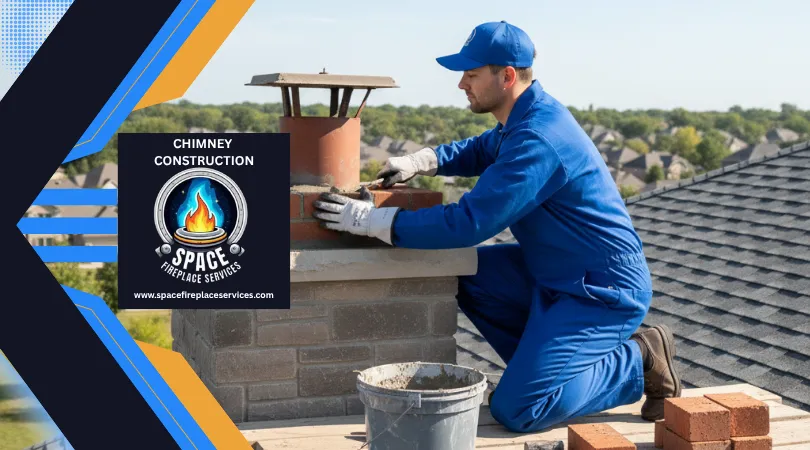
Learn moreCracked, flaking, or shifted brick doesn't just look bad — it pulls the eye to the one flaw on an otherwise good-looking stack. We rebuild compromised courses with color- and texture-matched units and the correct type-S or type-N mortar, blending the repair so the masonry reads as one continuous, original surface. A structural assessment comes first so we fix the cause, not just the face. You get brickwork that looks seamless from the curb and is sound enough to carry the chimney for decades more.
Call for masonry repair when one part of the stack has failed while the rest holds sound — a patch of spalling brick faces, a cluster of cracked or displaced bricks, a section beginning to bulge or open up. We treat that area surgically: cut the damaged brick and mortar back to sound masonry, then rebuild the spot with units matched to the original and mortar matched for strength, so the repair vanishes into the surrounding wall. It's narrower than our restoration service, which is the comprehensive, multi-element program for a chimney failing as a whole — crown, cap, flashing, and masonry rebuilt together — whereas masonry repair is the targeted brick-and-mortar fix on an otherwise sound stack. And unlike tuckpointing, which renews only the mortar joints, masonry repair replaces the brick itself wherever the brick is the thing that's failed.
Most repairs go wrong on the brick match, and that's where ours earns its name. We source reclaimed or matching brick for spalled-face replacement so an out-of-production blend repairs invisibly, and we cut out and reset flaked freeze-thaw brick instead of facing over the damage. Replacement units bed in Type N or Type S mortar matched to the existing masonry's strength — never the hardest mix by default — because a too-rigid mortar spalls the very brick around it, and pre-1930 brick resets in soft lime mortar for the same reason. Through all the cut-and-replace work runs OSHA-compliant silica dust control — HEPA extraction and wet-cutting — because a premium crew protects your home's air as carefully as its masonry.
Targeted is not the same as cosmetic — we repair the cause, not just the face. A rusted, expanding steel lintel "rust-jacks" the brick above it into stair-step cracks, so we replace the cracked brick and deal with the lintel rather than chasing the symptom every few years. Loose corbel-band brick near the top is reset before it works free; a bulging veneer face is re-tied to its backup with new masonry ties; and where stair-step cracks signal movement, we can bed helical crack-stitching bars to re-tie the brickwork instead of escalating to a rebuild. We sound the surrounding masonry with a hammer first to find the hollow, debonded, and frost-spalled areas that never show on the face, so the repair reaches the true edge of the damage rather than stopping at what's visible.
The honest line we hold is knowing when a targeted repair is right and when it isn't. If the deterioration has spread across multiple zones, or several systems are failing at once, we'll tell you restoration is the responsible answer rather than patch one section and watch the next go. But when the damage genuinely is localized, masonry repair is the precise, cost-right fix — and the same brick-matching discipline and finish standard apply in every Dallas-area home we work in, so a repaired section sits indistinguishable from the sound original masonry around it.
At Space Fireplace Services, a chimney masonry repair is never guesswork. We scope every job from a graded, photographed inspection first — the NFPA 211 level the evidence calls for — so the work is matched to what your flue and masonry actually need, with the report to prove it. The documented inspection is the record the chimney masonry repair is built on.
Chimney inspectionA chimney masonry repair isn't a matter of opinion — it's held to published national standards. Space Fireplace builds every job to the named codes below and documents it, so the work is provably right for an inspector, an insurer, or a future buyer. These are the universal standards; your city's permit and inspection requirements are confirmed with the local authority before we pull the job.
Any replacement masonry we set preserves the IRC clearance-to-combustibles air gap, 2 in to framing on an interior chimney and 1 in on an exterior one; bridging that gap with the repair is never an option.
We bed replacement brick in Type N or Type S mortar chosen to match the strength of the existing masonry, letting the new work flex with the structure rather than spalling the original brick around it.
If localized masonry damage could have traveled to the flue, we video-scope it to the NFPA 211 Level 2 standard before signing off, because a face that looks sound can hide a concealed liner breach.
Codes cited are the established national standards (NFPA, UL, IRC) that govern this service. The adopted code edition, permit, and inspection requirements vary by city —Space Fireplace verifies them with your local authority having jurisdiction on every job.
We pinpoint the damaged section, sound its edges to map the spread, and trace the water source feeding it.
The failed brick and mortar come out, cut back to sound masonry.
Matched brick is reset in strength-matched mortar and blended into the original so the patch reads as part of the wall.
A breathable repellent seals the repaired area to keep water out and stop the damage from returning.
We've worked on 1,000+ DFW homes over 10+ years. Every job — small sweep or full rebuild — runs the same way: certified technicians, written quotes, photo reports, warranty in writing.
Targeted brick replacement that repairs the failed section on its own rather than tearing into the whole stack.
Reclaimed or matched brick lets an out-of-production blend be repaired so seamlessly the fix all but disappears.
We chase the root cause, addressing rusted lintels and stitching cracks instead of skimming a patch over the face.
We sound the masonry around the damage to find its true edge before repairing.
Family-owned, CSIA-certified, NFPA 211–compliant. We're the team you call when you want it done right the first time — no rotating subcontractors, no upsell pressure, no surprises. Same techs, same trucks, same standard.
Plan on a Level 1 inspection every year — that's the NFPA cadence — with an actual sweep once buildup reaches 1/8" of creosote. For a fireplace you light through the season, that usually lands at once a heating season. Think of it as the upkeep that keeps the centerpiece of the room clean, drawing well, and ready to look its best.
Yes. The inspectors who assess your chimney hold current CSIA (Chimney Safety Institute of America) certifications — you can confirm them in the CSIA member directory at csia.org — and our fireplace installations are handled by NFI specialists. The craft that makes a hearth a showpiece starts with the people standing in front of it.
Yes — emergency response is available 24/7 (subject to crew availability) for active water leaks, an animal trapped in the flue, post-fire damage, and storm damage, same-day in most cases. A fireplace is the heart of a room; when it's at risk, we treat it that way.
Always. You get a written quote before a single tool comes out, with photos of exactly what we found. Final pricing tracks the chimney's real condition and anything additional the inspection surfaces — no surprises, just a clear picture of what your fireplace needs.
Yes — our annual maintenance membership runs $19.99/month ($240/year) and covers a yearly Level 1 inspection and sweep ($248 value), priority scheduling, 10% off all repairs, and emergency-response priority. Cancel anytime, no contract. It's the quiet way to keep your hearth looking and working its best year after year.
Last reviewed:
Other services in the Repair category.
Free written quote. Same-week scheduling. 24/7 emergency response when you need it.
Active leak, animal in flue, post-fire damage, or smoke event? Real humans on the line 7 AM to 12 AM every day — replies in under 2 minutes. Tech dispatch within 2 hours during business hours, subject to crew availability after-hours.
Emergency line